
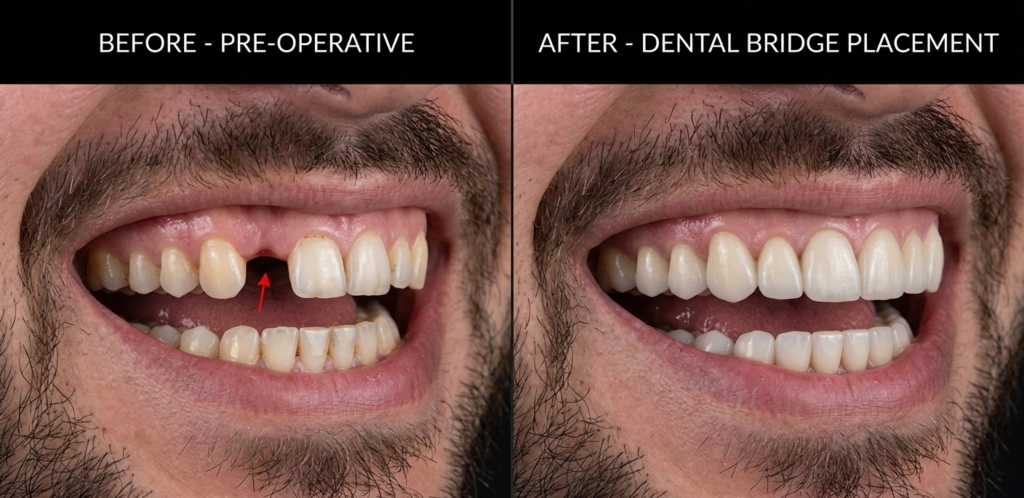
Missing teeth affect more than your ability to smile because they disrupt your ability to chew and speak and they harm your complete oral health. The field of modern dentistry provides multiple trustworthy treatment options which include dental bridges as a reliable method for replacing lost teeth. Today’s dental bridges have improved strength and better natural appearance and increased lifespan because of advancements in restorative dentistry solutions and better material development.
This article investigates the scientific principles which enable dental bridges to maintain their durability throughout time while describing the materials which dentists use to create these bridges as effective solutions for replacing missing teeth.
What Are Dental Bridges?
Dental bridges exist as permanent dental restorations that function to restore multiple lost teeth. The system connects artificial teeth through their attachment to adjacent natural teeth and dental implants.
Understanding the Role of Dental Bridges in Restorative Dentistry
Restorative dentistry uses dental bridges to restore both functional abilities and physical appearance of patients. The dental bridges support facial structure while they stop adjacent teeth from moving to incorrect positions.
How Dental Bridges Replace Missing Teeth
A fixed dental bridge treatment typically includes one or more artificial teeth supported by dental crowns placed on the neighboring teeth. The system delivers both stability and restoration of normal chewing functions while enabling proper speech abilities.
Who Needs Dental Bridge Treatment?
Patients with one or more missing teeth often benefit from dental crown and bridge treatment. The dentist will recommend the procedure when the existing teeth possess sufficient strength to support the bridge system.
The Science That Makes Dental Bridges Strong
The extended lifespan of dental bridges results from three elements which include quality materials and advanced technological systems combined with accurate dental methods.
The Modern Dental Bridge Materials of Today
Contemporary dental bridge materials are engineered to replicate both the functional strength and visual characteristics of real teeth. The combination of porcelain and zirconia materials delivers both high durability and appealing visual effects.
Modern Dental Technology Enhances Durability
Dental bridge technology now enables dentists to create bridges through digital scanning and CAD/CAM manufacturing which produces highly accurate bridge designs. The system creates a complete dental bridge solution with perfect fit which maximizes bridge lifespan.
The Role of Adjacent Teeth and Support Structure
The supporting teeth play a critical role in how dental bridges function. Testing of teeth through correct methods brings about bridge stability which lasts throughout its operational time.
Types of Dental Bridges Used in Modern Dentistry
Dentists provide various dental bridge options which depend on the patient’s dental condition and the tooth which has been lost.
- Traditional Fixed Dental Bridges
The fixed dental bridge treatment which requires crown placement on both sides of the missing tooth functions as the most commonly used dental solution.
- Cantilever Dental Bridges
These bridges become necessary when only one tooth exists to support them. Missing teeth which need to be replaced between the two existing teeth which support them can be replaced with this dental option.
- Maryland Bonded Bridges
Maryland bridges use a metal or porcelain framework bonded to the back of the adjacent teeth, making them a more conservative prosthetic dental solutions option.
- Implant-Supported Dental Bridges
Multiple missing teeth cases benefit from implant-supported dental bridges because they offer better stability.
Materials That Make Dental Bridges Long-Lasting
The strength of long-lasting dental bridges largely depends on the materials used during fabrication.
- Porcelain Dental Bridges
Patients prefer porcelain dental bridges because they provide a natural look which matches their existing teeth.
- Zirconia Dental Bridges
Zirconia dental bridges provide strong dental solutions because they can endure heavy use and their strength makes them suitable for patients who require durable tooth replacements.
- Porcelain-Fused-to-Metal Bridges
These bridges combine metal durability with porcelain aesthetic qualities to produce dependable dental bridges which can withstand daily usage.
Factors That Affect the Longevity of Dental Bridges
Dental bridges have multiple key factors which determine their total lifespan.
- Proper Placement and Dental Expertise
Dedicated professionals need to create dental bridge designs through their precise installation process to achieve optimal bridge durability.
- Bite Alignment and Jaw Pressure
Dental bridges achieve their extended lifespan through correct bite alignment which prevents excessive pressure from damaging the bridge.
- Oral Hygiene and Daily Care
Effective oral hygiene methods help maintain dental bridge supporting teeth while extending the duration of dental bridge protection.
Benefits of Strong and Durable Dental Bridges
The selection of robust dental bridges provides multiple benefits which dentists consider essential for their work.
- Restoring Chewing Ability
They restore normal chewing function, allowing patients to enjoy a wider variety of foods.
- Improving Smile Aesthetics
Modern prosthetic dental solutions create artificial teeth that appear natural, which improves the overall beauty of your smile.
- Preventing Teeth from Shifting
Dental bridges maintain proper dental alignment by closing spaces created by lost teeth.
Tips to Maintain Your Dental Bridges for Long-Term Durability
Proper care plays a major role in extending dental bridge longevity.
- Daily Oral Hygiene Practices
People should brush their teeth two times each day and practice flossing together with using special bridge floss to clean up food particles which become stuck in their mouth.
- Regular Dental Check-ups
Dental bridges need monitoring through routine dental visits because these visits help dentists find problems before they become worse.
Foods to Avoid with Dental Bridges
People should stay away from hard and sticky foods because these types of foods can break their strong dental bridges.
When Should You Consider Getting a Dental Bridge?
Dental bridges provide an effective solution for people who need robust tooth replacement methods. Dentists recommend these dental bridges for patients who have lost multiple teeth but still possess sufficient healthy teeth to support the bridge.
Conclusion: Why Dental Bridges Are a Reliable Tooth Replacement Solution
The current dental bridge system offers improved strength and durability because of its modern technology and high-quality bridge materials. Porcelain dental bridges and zirconia dental bridges provide an effective and permanent solution for replacing missing teeth.
The right treatment combined with proper oral care allows patients to experience long-lasting benefits from their dental bridges.